Article
Creative brief template: how to write a brief that gets it right first time
The brief you wrote in fifteen minutes is costing you weeks.

Co-founder and CEO
· 3 min read
Key takeaways
- Open the brief with the problem the work needs to solve, not the format you want.
- Name one thing the audience should feel or do. One, not five.
- Add a reference for what good looks like, and one for what to avoid.
- Agree who gives feedback and who approves before the work starts.
- 60% of the briefs Workspace receives arrive incomplete, and the gaps cost days later.
Contents
Hetty on our team puts it better than I can. A bad brief doesn't fail at the start. It fails three weeks in, when the work comes back wrong for the second time and nobody can agree whose fault it is.
It happens more than most teams think. Across the requests we manage, 60% of briefs arrive incomplete. More on what our request data shows.
It's rarely carelessness. The brief got written in fifteen minutes between two meetings. It described the output and left out the problem. So the designer made reasonable assumptions, the marketing lead disagreed with them, and the conversation that should have happened in the brief happened in the comments instead, where it's slower and far more expensive.
The template
Copy this, fill it in, and send it with every request.
- The problem: what's happening, and what needs to change.
- The goal: the one thing the audience should feel or do.
- The audience: who they are and what they care about.
- The deliverables: formats, sizes and channels.
- References: what good looks like, and what to avoid.
- Must-haves: logos, copy, brand rules and legal lines.
- Deadline: when it's needed, and why that date.
- Feedback: who reviews, and who approves.
How to fill in each part
Start with the problem, not the deliverable
“A LinkedIn banner” is a deliverable. “We need finance leads to sign up for our webinar on the 14th” is a problem. Give a designer the second and they can make good decisions when the brief runs out of detail. Give them the first and all they can do is guess.
Pick one thing the audience should feel or do
Not three. Work that tries to achieve everything ends up saying nothing clearly. Choosing is uncomfortable, and that's exactly why it helps.
Show what good looks like
The gap between what you picture and what the team builds is where revision loops start. Attach two references you like and say why: the colour, the tone, the layout. One example of what you don't want is just as useful.
Agree how feedback will work
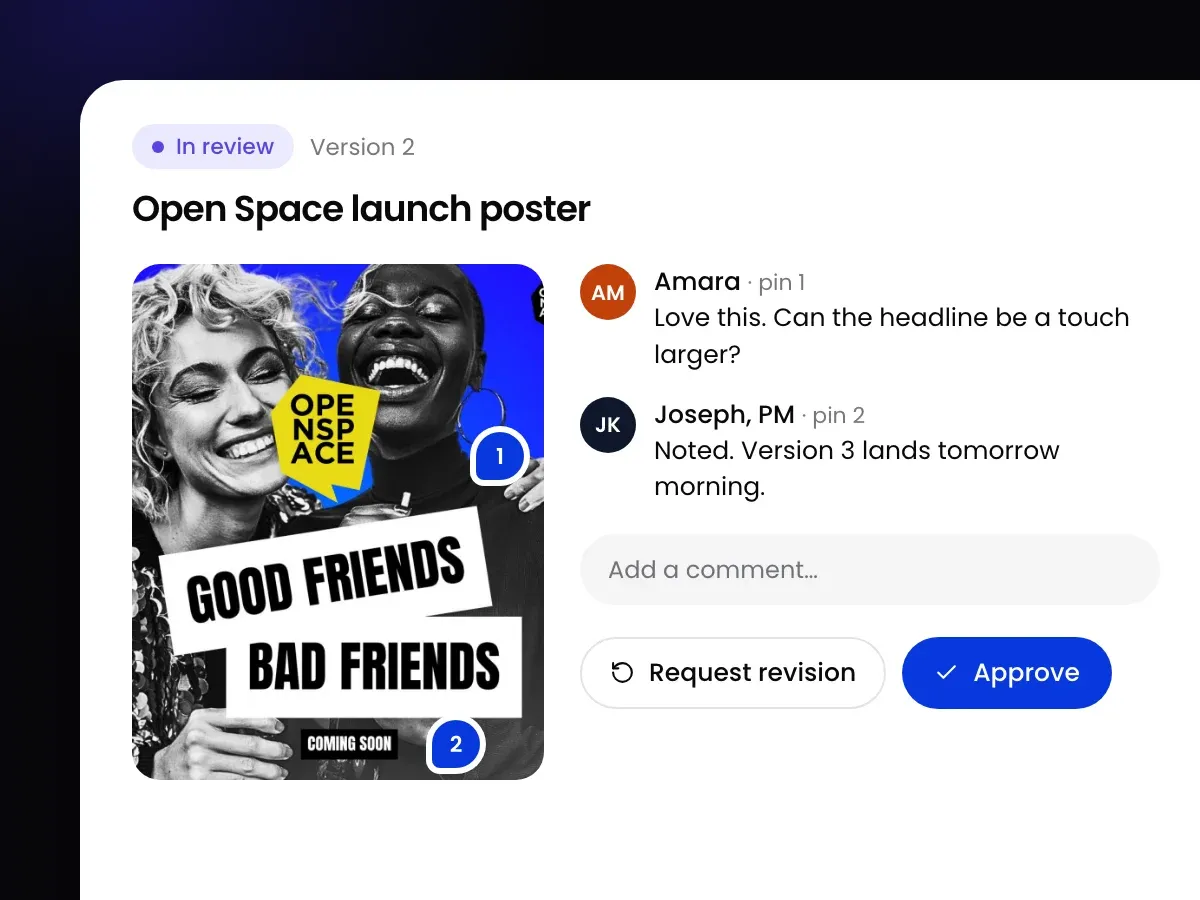
Decide who comments and who has the final say before anything is made. Collect comments in one place and send them as one round. Three people giving feedback separately is three versions of the brief.
A worked example
- Problem: webinar sign-ups from finance leads are below target with ten days to go.
- Goal: a finance director sees the post and registers.
- Audience: finance directors at UK companies of 50 to 500 people, worried about cash flow this quarter.
- Deliverables: one LinkedIn single image (1200 x 1200) and one carousel of five slides.
- References: our last carousel (clear, one stat per slide). Avoid stock photos of handshakes.
- Must-haves: speaker photo, date and time, registration link, brand colours.
- Deadline: Thursday, so it can run for a week before the event.
- Feedback: Priya reviews, Tom approves.
That took about ten minutes to write and answers nearly every question a designer would ask.
Let AI do the first draft of the brief
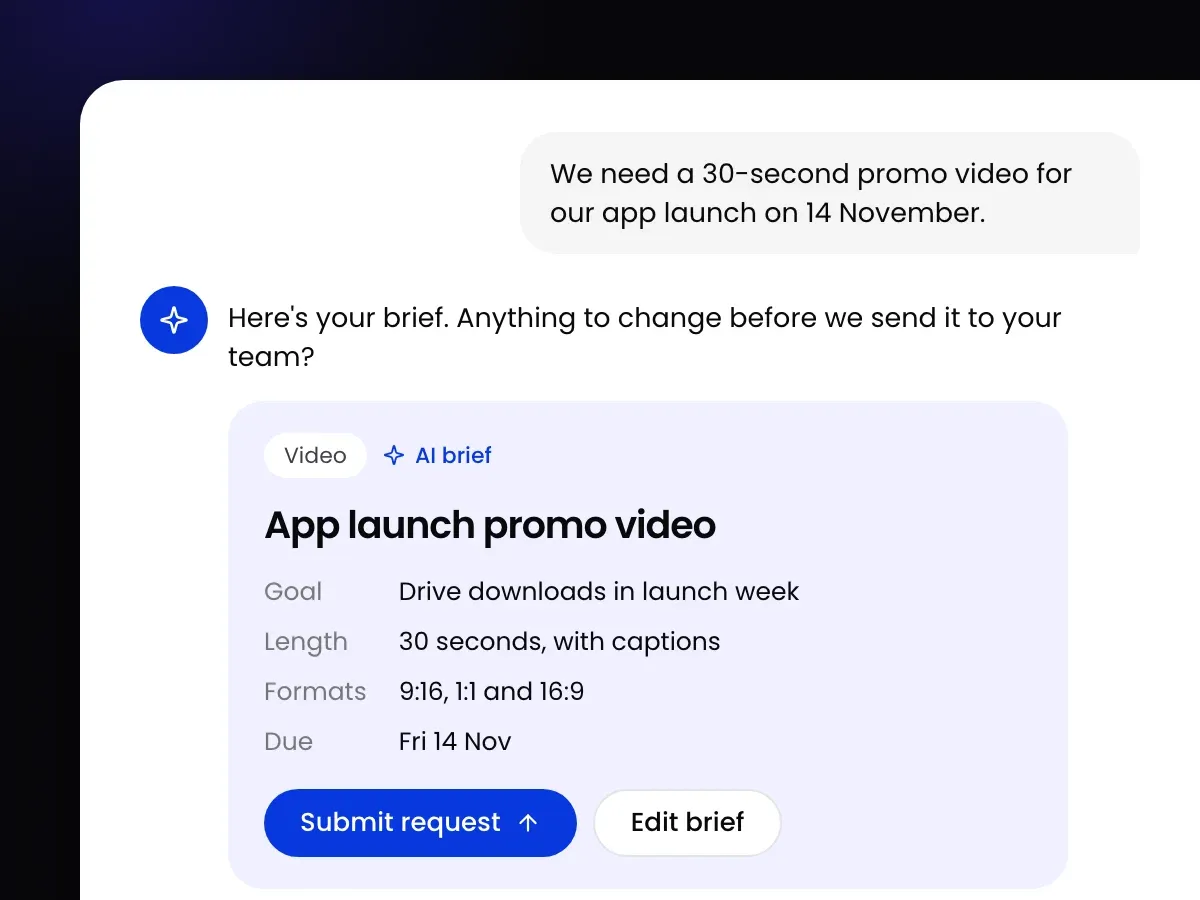
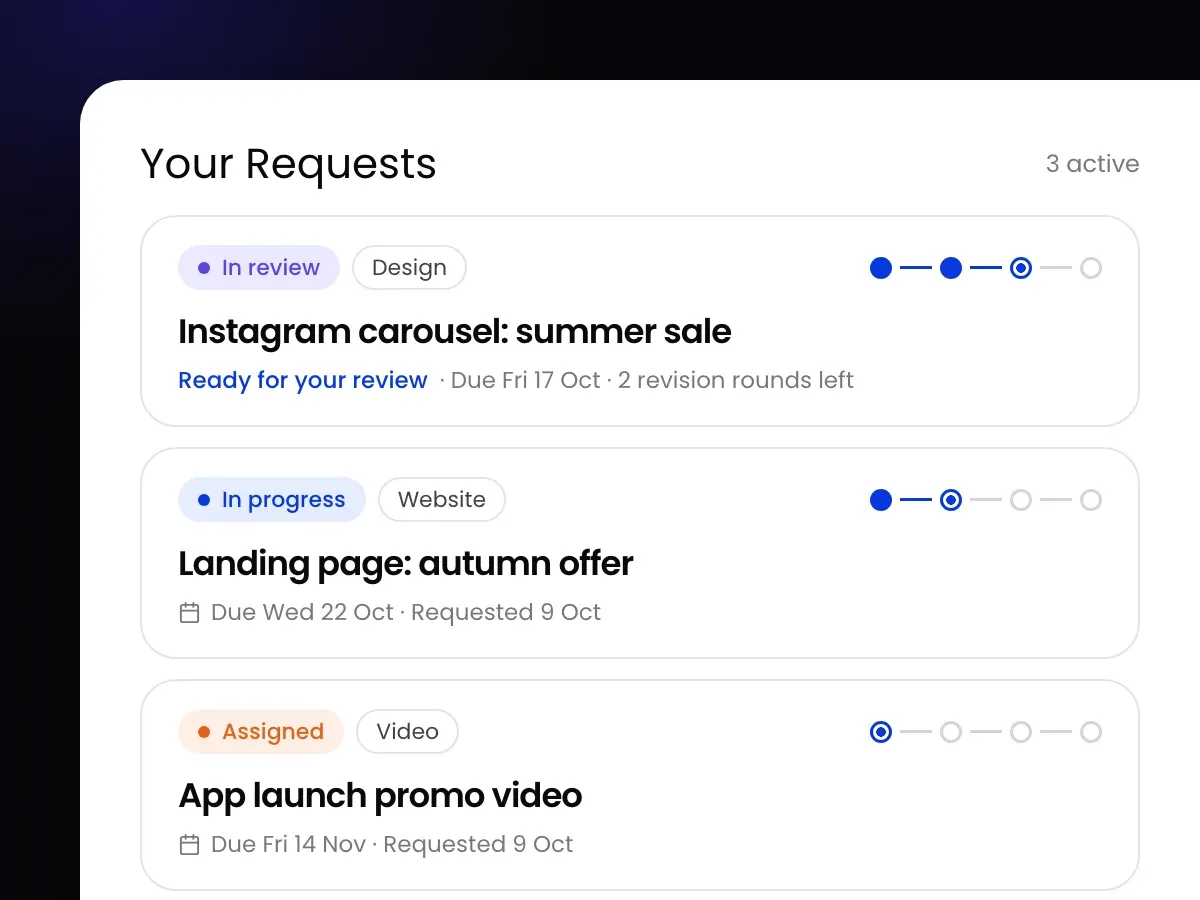
Brief writing is one place AI genuinely saves time without adding risk. In the Workspace app, you describe what you need in a sentence or two and AI turns it into this structure, so the brief is complete before anyone starts. The FAQs explain how requests work from there.
Questions, answered.
What should a creative brief include?
The problem, the one goal, the audience, the deliverables and sizes, references for good and bad, must-haves such as logos and legal lines, the deadline, and who gives feedback and approves.
How long should a creative brief be?
As short as it can be while still answering what, who, where, when and why. One page is usually enough.
What is the most important part of a creative brief?
The problem the work needs to solve and the one thing you want the audience to do. With those clear, a good creative team can make sensible decisions on everything else.

About the author
Co-founder and CEO
Sydney Sam is co-founder and CEO of Workspace Global, which has given growing teams on-demand creative support since 2015. Sydney writes about creative operations, leadership and building teams across the UK and Ghana.
LinkedInKeep reading
Article
How long does design work take? Realistic turnaround times
Realistic turnaround times for design work, from 24-hour revisions to full websites, plus how to set a deadline that holds.
Sydney Sam · · 2 min read
Article
Will AI make your brand look cheap? How to use it and stay consistent
AI speeds up first drafts, but more output from more hands makes brands drift. Where the bottleneck moves, and five ways to keep your brand consistent.
Sydney Sam · · 2 min read

Article
60% of creative briefs arrive incomplete: what our request data shows
60% of briefs arrive incomplete, the median turnaround is 3 days and requests take up to 4 revision rounds. What our data shows, and what to do about it.
Sydney Sam · · 3 min read